Weathering the odds: how UK bettors adjust stakes on outdoor events using real-time climate data from regional forecasts
Ulrich Hughes · Sep 14, 2026
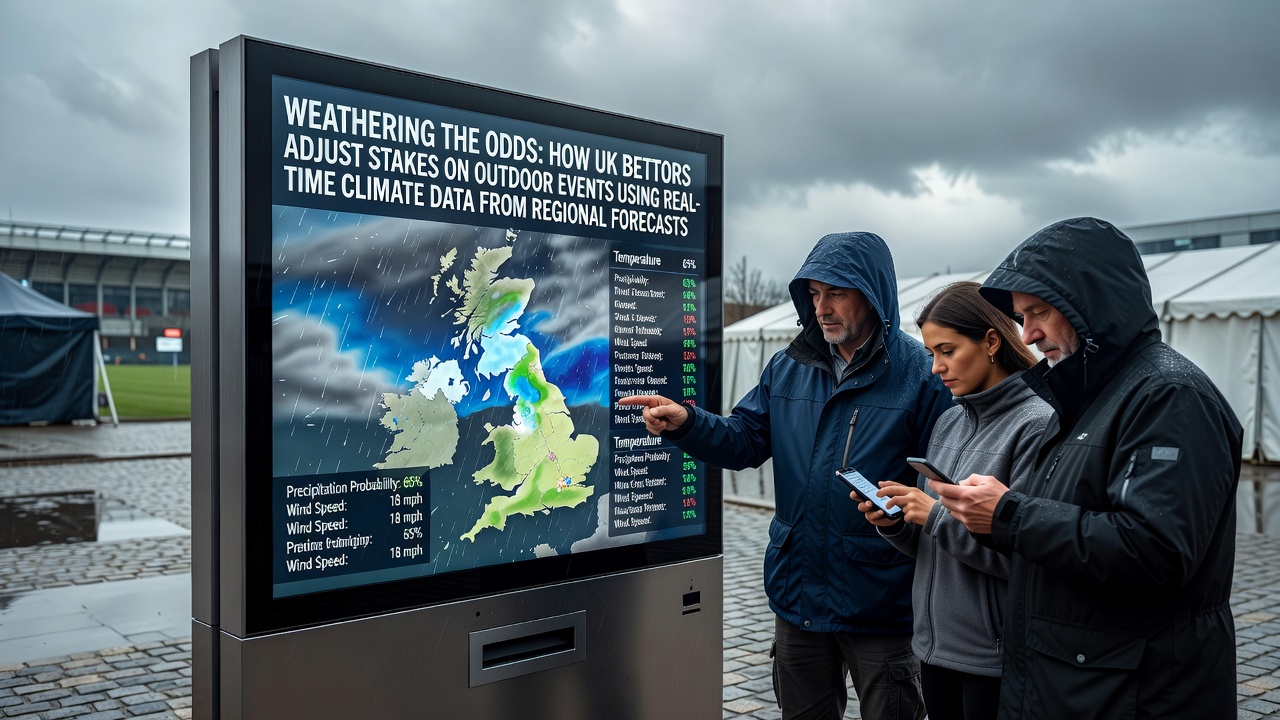
Weathering the odds: how UK bettors adjust stakes on outdoor events using real-time climate data from regional forecasts
Bettors across the UK have long tracked variables that shift the probabilities in outdoor competitions, and regional climate data now plays a direct role in stake decisions for events like tennis tournaments, cricket matches, golf tournaments, and horse racing meetings. Real-time updates from sources such as the Met Office and the European Centre for Medium-Range Weather Forecasts supply minute-by-minute readings on precipitation, wind speed, temperature, and humidity that can alter surface conditions, player endurance, and equipment performance within hours.
Regional forecasts shape pre-event planning
Regional models break the UK into zones that align with major venues, allowing bettors to compare forecasts for specific locations rather than relying on broad national outlooks. Data from these grids often shows that a 5 mm rainfall prediction in one postcode can reduce ball bounce consistency on grass courts while leaving another venue unaffected, and bettors respond by scaling exposure accordingly. In September 2026 several high-profile autumn fixtures coincided with shifting Atlantic fronts, and analysts noted increased traffic to forecast APIs in the 48 hours before kickoff as participants sought updated wind vectors and dew-point readings.
Live adjustments during play
Once events begin, continuous feeds let observers recalculate probabilities in near real time. A sudden gust recorded at 35 km/h at a coastal golf course, for instance, can lengthen approach shots by 10-15 metres according to trajectory simulations published by sports analytics groups, prompting reduced stakes on birdie-related markets. Cricket bettors monitor radar loops for incoming showers that threaten to shorten innings, because reduced overs compress scoring distributions and change the value of run-rate propositions. These micro-adjustments occur through betting platforms that integrate weather layers directly into their interfaces, so stake changes register within seconds of an updated bulletin.
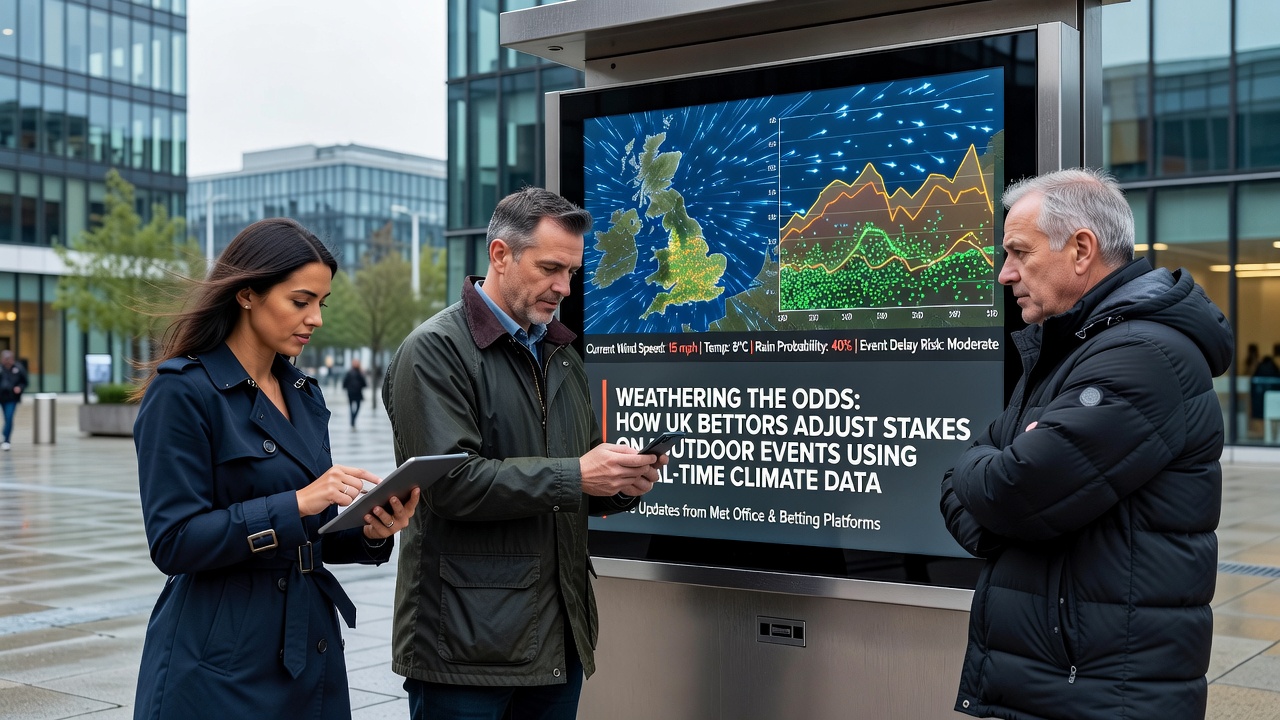
Technology and data sources
Smartphone applications aggregate readings from both official meteorological services and private sensor networks positioned near stadia. Bettors cross-reference Met Office hourly grids with higher-resolution commercial products that incorporate Doppler radar and on-site anemometers. Studies from the University of Reading have quantified how wind direction shifts of more than 20 degrees correlate with measurable drops in serve accuracy during tennis matches, giving quantitative backing to the informal adjustments many participants already make. Subscription services now push alerts when forecast confidence intervals tighten or when probability thresholds for precipitation exceed 60 percent within a two-hour window.
Market response and liquidity patterns
Bookmakers have observed that liquidity on certain weather-sensitive lines thins when forecasts remain unsettled, because participants wait for clearer signals before committing larger amounts. Conversely, when regional models converge on stable conditions, volume increases on totals and performance props that benefit from predictable playing surfaces. Data from industry reports indicate that average stake sizes on outdoor tennis markets during the grass-court season fluctuate by as much as 18 percent between dry and unsettled forecast periods, reflecting the perceived reliability of the underlying conditions.
Regulatory and transparency considerations
Operators must ensure that any weather-derived information they supply complies with fair-trading rules enforced by bodies such as the Australian Competition and Consumer Commission and the Malta Gaming Authority, both of which have issued guidance on the presentation of dynamic data. Bettors therefore treat forecasts as one input among many, combining them with historical performance statistics and player injury reports rather than treating a single rainfall probability as decisive.
Conclusion
UK bettors now treat regional climate data as a standard component of outdoor-event analysis, using it to modulate stake sizes before and during competitions. The integration of live meteorological feeds has created a feedback loop where updated forecasts trigger immediate recalibrations across multiple markets, and the practice continues to evolve as both forecast resolution and platform integration improve.